Are We Neglecting the Old Women Around Us?
Clarin George · 22 September 2026 · 12 min read
This essay was first published on 13 November 2015 and was rewritten and expanded by Clarin George in September 2026.
By treating care as something women are naturally expected to do, rather than as work that demands time, expertise, and sustained effort, economic systems render it invisible. (Who Cares for the Caregiver, 2026)
India has been independent for eight decades. Over the course of these eighty years, our country has taken monumental leaps forward in economic growth and social development. We have transitioned towards a steady-state population, improved maternal health, reduced child mortality and worked towards disease control. However, India’s demographic trends show that we are now entering an ageing phase. By 2050, the number of senior citizens in the country is projected to reach 347 million (UNFPA, 2024).
But we are, in essence, a minimalist welfare state. Where does this leave the senior citizens who need state assistance?
While pension schemes exist, they generally apply only to people who work in formal sectors. A large portion of informal sector workers have no pension coverage to cushion them in their twilight years. Studies indicate that merely 30% of the elderly have access to pension benefits. The rest of them have no choice but to extend their working lives far beyond typical retirement age, as in Sulochana’s case.
Sulochana is 69 years old and as widow is living alone in a village in Nasik because she has no sons, only three daughters all of whom are married and living with their families in different districts of Maharashtra. She has been working as unskilled labourer in a large cycle making factory for many years and is now thinking of retiring from work as her health has not been good for the last one year and she is unable to put in the normal 8-10 hours of work every day. She asked for a part time work schedule but the company did not accept her request. There are many younger workers who are waiting in line to take her job when she can no longer work. Finally Sulochana had to quit the job but the factory had no obligation to give her any pension. They gave her Rs. 5000 as a one-time payment. With no other source of income and with her “retirement benefit” dwindling fast, Sulochana does not know what else to do and where else to go. She asked a few friends but no one can help. She has now taken up two jobs as a maid in a nearby apartment complex but her health condition is not allowing her. She has already received warnings that she will lose her jobs if she does not put in the proper hours of work.
Historically, India’s social safety infrastructure basically consisted of family members who voluntarily took on the responsibility of caring for the elderly. The joint family system ensured that ageing parents and relatives in ill health were cared for. However, as nuclear families become increasingly common, this traditional support system is no longer as viable. Typically, it was the male child of the family who would provide and care for ageing parents. But as domestic and international migration to places with high housing cost becomes more prevalent, the old living arrangement can no longer serve the needs of the elderly.
In this isolating environment, elderly women often face greater struggles than elderly men. Women in India walk through a series of quiet life pivots that men are completely spared from. Women often start as young girls in their fathers' homes, marry and move to their husbands' houses, and eventually outlive their husbands only to relocate to their sons' homes. She is always living in a man’s house. Even in states like Bengal, where there are specific inheritance laws that ensure that a widow inherits a portion of her spouse’s property, many willingly transfer their property rights to their sons, leaving them dependent on their family's goodwill.
Women's willingness to hand over their financial independence usually stems from lifelong conditioning which teaches them that if they are of service to men then they would naturally be taken care of. Old oral traditions are full of stories where a woman’s life of hardwork and turmoil end when she moves into her son’s house. These stories, often in glowing terms, describe the authority and respect she would gain in her son’s household as the powerful matriarch. But reality rarely lives up to these stories. HelpAge India’s 2012 study revealed that elderly women are most frequently abused by their sons, a pattern that holds true even in wealthy households.
Relying on sons in old age is a quick way of exposing all the vulnerabilities a woman may have overlooked throughout her life. Women generally render service within the household to proverbially “earn their keep”. When she is too old to participate in laboring inside the house and has virtually no money to contribute to the house’s upkeep, she is a burden. The loss of a spouse further exacerbates that vulnerability. When an elderly woman loses her husband, she also loses her standing in the house because her voice is only as strong as her husband’s. Without a close male relative advocating for her, she is essentially invisible. In a living environment fraught with these sort of unspoken challenges, an elderly woman would have to make herself small and inexpensive to take care of to ensure that she still has a house above her head.
Instead of expanding state support, governments shift the burden of eldercare entirely onto children through laws like the Maintenance and Welfare of Parents and Senior Citizens Act, 2007. This is yet another fast track to breeding resentment within family units by legally demanding family members to take charge of providing for the elderly, whether they are willing or financially equipped to do so. This does very little to help the aged, especially elderly women who may wish to be independent but have no means to do so.
A study found that 69% of older women who live alone prefer that arrangement over 35% of older men. More often than not, elderly women are emotionally and physically able to look after themselves. The only thing holding them back is money, or the lack thereof.
Across decades, women’s engagement with paid employment in India has remained limited, with a large share of their work taking place within informal arrangements, family enterprises, or entirely outside wage-based systems (ILO, 2018; United Nations, 2011). These labour histories carry lasting consequences. Because pensions and retirement benefits are largely tied to formal employment, elderly women are far less likely than men to have access to any form of income security in old age, leaving them dependent on family support or minimal state assistance.
For elderly women whose only work experience lies within the domestic sphere, where their labor earns them no salary, financial vulnerability exposes them to further abuse. Elderly widows, in particular, are often treated like an afterthought within the household. They are often fed last, receive minimal medical care, and are routinely overlooked in family inheritance and wealth distribution. Moreover, if the expenditure and caregiving of an elderly widow proves to be too difficult they are abandoned altogether.
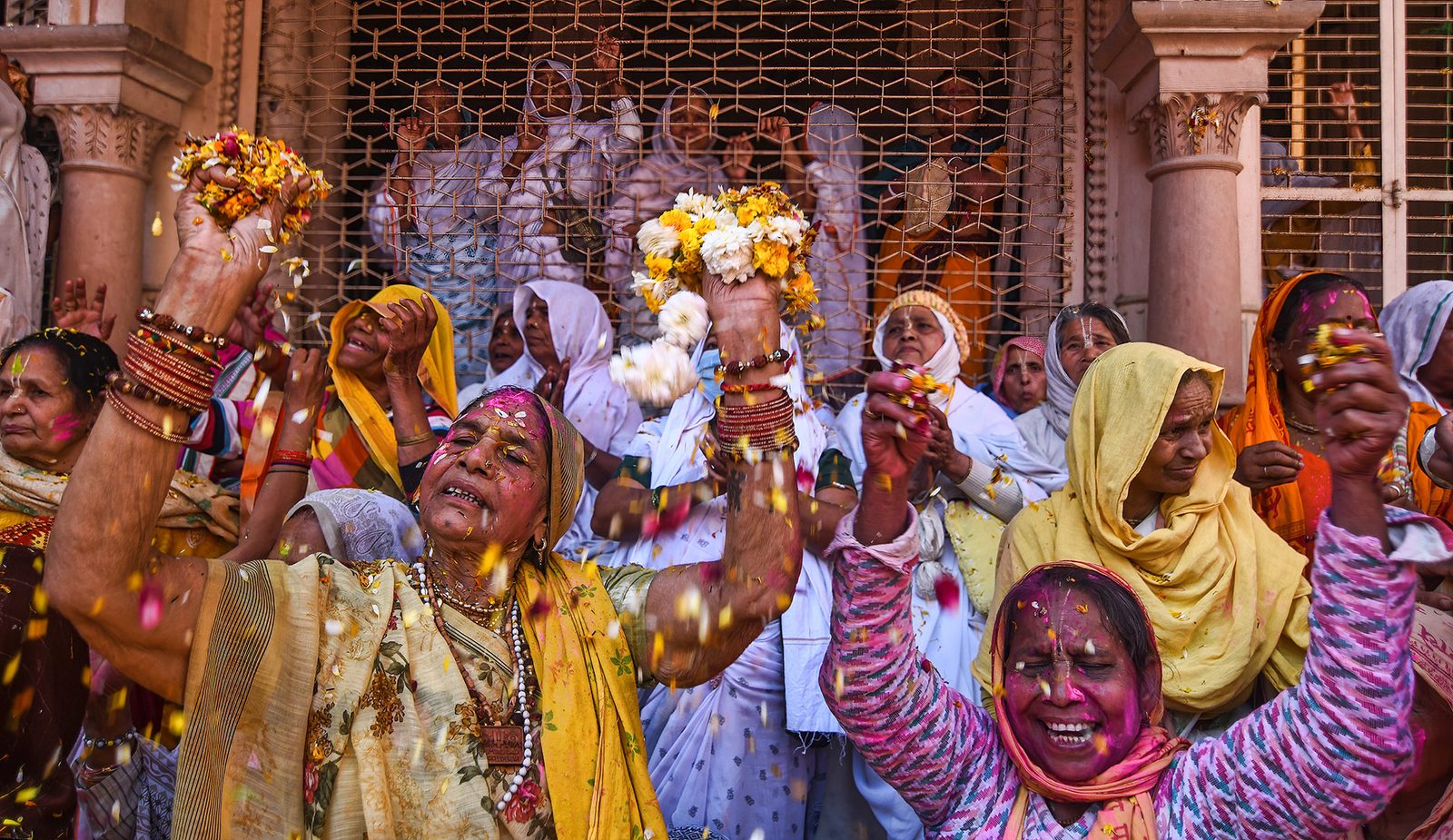
The holy city of Vrindavan, Lord Krishna’s childhood home, is the last residence to at least 20,000 elderly widows of our country. Ageing widows from all over India are abandoned there by their family members during festival seasons. Left with no money, they eventually resort to begging on the streets to feed themselves. A pretty bleak picture! Especially considering that these women have worked all their lives. How does a lifetime of labour result in destitution?
Elderly women are the backbone of developing India. Their labour is extremely essential to sustain the budding economy. If women were rightfully remunerated for raising children, cooking, cleaning, washing linens, organizing the house, tending to the elderly, alongside all the other chores they did in their prime working years, then they too would have a respectable amount of money to sustain them in their later years.
Shreya, a mother of two living in a joint family with her husband, children, and in-laws, leaves for work every morning at 7:00 a.m. The family cannot afford domestic help; her husband also goes to work, and her father-in-law is old. He is exempt from domestic chores. The housework is shared between Shreya and her mother-in-law. Shreya prepares breakfast for the family before she leaves, and her mother-in-law serves it to everyone while Shreya is away. She then gets on with her daily ritual of preparing lunch. Her frail hands continue to lift heavy casseroles, dropping them with a thump as her fingers slip over the handles, struggling to find a grip.
Would young women like Shreya be able to work had it not been for her mother-in-law single-handedly taking on the domestic chores?
Why do women end up absorbing the sheer load of housework, which, in practise, should be a shared responsibility of everyone who lives in the house? Including, the men.
Men have long removed themselves from domestic chores and child-rearing, treating domestic labor as exclusively female work. The women, who kept their houses afloat, were expected to do so without any monetary compensation. Savings, if women had any, often came from quietly holding onto spare change from routine household purchases. They were never formally given any money for their labour, let alone a monthly allowance.
Moreover, a woman’s work never ends. There is no age of retirement. As women age, their responsibilities simply reset. They are once again drafted into raising children (grandchildren this time!), cook, clean and care for relatives, even as their own health declines. The economic freedom of younger women is paid for in advance by the labor of their mothers and mothers-in-law. They ensure that while she works, her children are fed and cared for.
Unlike formal employment with regulated hours, a homemaker’s workload is so gruelling that they often develop health problems that physically reflect the strain they are put under. Aged women often suffer from exhaustion and chronic pain. yet India doesn’t really have healthcare services to address the health problems they develop due to child bearing, poor nutrition and years of manual labour.
What About Pensions?
Across all Indian states, an overwhelming majority of elderly women have no personal income, savings, or access to non-contributory social pensions. Moreover, when a woman qualifies for an old-age pension, she is often unable to provide all the documents or finish the necessary steps involved in obtaining the benefits.
Elderly women often lack important paperwork such as:
- Birth certificates (The Registration of Births and Deaths Act was only enforced in 1969. People born before that had their births recorded in physical ledgers by Panchayats or hospitals. These records are not usually digitized and often get damaged over the years.)
- Proof of residence (Women change their residence several times in their lives. If there is no proper documentation after a residence change, then there will be no records to indicate that. Additionally, utility bills usually have the husband’s name on it, not the wife’s.)
- Age proof certificate (A lot of women don’t have Madhyamik or equivalent exam certificates with date of birth clearly mentioned on it. Historically, women in India have had very little access to formal education.)
- Bank passbook (Opening a bank account requires valid IDs like Aadhar and PAN card. For elderly women who have relied on cash transactions all their lives, creating a bank account with documents which they may or may not have in their possession can be difficult.)
If penniless, an elderly woman would have to run pillar to post to arrange these documents to access her pension. Moreover, the application process itself can take anywhere between 6 months to a year depending on the state.
Elderly women in urban areas are usually not fully aware of the various pension schemes that are designed for them. They are also less aware and less likely to use different social benefits like train ticket concessions, bus seat reservations, faster telephone connections, different tax benefits or higher interest rates on deposits, etc. And for aged widows who apply for specific pension schemes that they are eligible for such as IGNWPS (Indira Gandhi National Widow Pension Scheme), the payout can be as low as Rs. 200 per month and the money often takes forever to actually reach the pensioner.
I am Sita Devi, 85 years old living in Araria district of Bihar with one of my daughters. I have seven daughters and two sons but none of them are willing to take care of me except the daughter with whom I am currently living, knowing well that my son-in-law is not happy with my staying with them. My two sons are well settled: one in Delhi as a daily wager and the other in Araria. My advancing age and failing health does not permit me to go out anywhere or do any work at home. With no savings of my own, I am fully dependent on my daughter’s family. As I do not have a BPL card, I went to our village chief who does not help in anyway but wants Rs. 200 to fill up application forms. Without a BPL card I am not eligible for my social pension and hence feel and experience many instances of indignity.
Women dedicate their most productive years to uncompensated domestic labor, yet when age sets in, healthcare and mobility aids, like spectacles, hearing aids, or walking sticks, are far more likely to be prioritized for their husbands.
Why are women who sacrifice their lives in service of others treated like an unwelcome burden?
Are the independent women from the next generation, who have their own money, going to fare better in old age? Think again. India ranks 131 out of 145 countries in wage equality for similar work. When women are paid less for the same work, every undercompensated month compounds into decades of lost savings. If sweat, sacrifice, and hard labor were currency, the nation's elderly women would already be living in abundance. But we all know, kind words and good intentions don’t pay the bills. Women, old and young, need to stand up and ask for the money we rightfully earned.
References
- Reddy AB (2016), "Labour force participation of elderly in India: patterns and determinants". International Journal of Social Economics, Vol. 43 No. 5 pp. 502–516
- Wilder, A. C.. “Living arrangements of elderly widows in India: Family convention, bad luck and abandonment.” (2016).
- The Beggared Mother: Older Women's Narratives in West Bengal - Sarah Lamb, Oral tradition, Vol.12(1), pp.54-75
- Gupta, N. (2016). Development, Elder Abuse and Quality of Life: Older women in Urban India. International Journal on Ageing in Developing Countries, 1(2), 158–173.
- Gupta, Nidhi (2013). Older Women in India: Issues and Concerns. In S. Siva Raju, U. V. Somayajulu, & C. P. Prakasam (Eds.), Ageing, Health and Development (pp.203-222). Delhi: B. R. Publishing Corporation.
- Giridhar, G., Subaiya, L., & Verma, S. Building knowledge base on ageing in India:Increased awareness, access and quality of elderly services.
- Dash, S. Who cares for the caregiver? Elderly women, gendered ageing, and India’s unpaid care economy.
- Sonune, M., & Ugargol, A. (2025). The need for age-inclusive and gender-sensitive social policies for India’s longevity society. Ageing and Longevity, 6(1), 73–97.
- How to Get Birth Certificate in India Born Before 1989 (https://nriway.com/blog/how-to-get-birth-certificate-in-india-born-before-1989)
- Age-proof norm eased for pensioners over 80 years. (2023) (https://timesofindia.indiatimes.com/city/kolkata/age-proof-norm-eased-for-pensioners-over-80-years/articleshow/100541256.cms)
Tagged
- Celebrity
- Content
- Entrepreneurial Interviews
- Entrepreneurs
- Feministaa Interviews
- Feministaa Media
- Indian Women
- Indian Women Achievers
- Inspiration
- Inspirational Content